



EXCLUSIVE
Alexis Vidal, Senior Vice President Commercial, ATR talks to Jayant Baranwal, Editor-in-Chief, SP’s Airbuz on how ATR is driving regional connectivity and unlocking the underserved markets through the turboprop advantage, powered by economics, SAF, and AI.

Jayant Baranwal (Baranwal): What it does it take to be the leader in the Turboprop Regional Aircraft market?
Alexis Vidal (Vidal): Leadership in the turboprop regional market comes down to delivering the right balance between efficiency, sustainability, innovation, and value for customers. ATR has built its position by offering aircraft with the lowest operating costs in the regional segment, combined with strong reliability and global support. At the same time, the ability to connect underserved regions and operate in challenging environments has made turboprops essential to regional connectivity.
Continuous innovation also plays a critical role, whether through more efficient engines, advanced avionics or futurefocused concepts. Ultimately, being the leader means providing airlines with an aircraft that is both economically viable and aligned with the industry’s long-term environmental goals. ATR’s position is built on over four decades of experience, with more than 1,900 aircraft sold and over 1,700 delivered worldwide, serving around 200 operators across 100 countries.
Leadership in today’s market also means understanding and anticipating the needs of high-growth regions such as India. With one of the world’s most ambitious aviation expansion plans, including the target to reach around 230 airports by 2030, the country illustrates how regional aviation is becoming a central pillar of economic development. In such environments, the ability to provide efficient, adaptable aircraft that can support rapid network expansion is essential.
Baranwal: Why do you think Turboprop Engine Aircraft is a better option compared to the Jet Engine Aircraft for the regional aviation market?
Vidal: Turboprops are optimised for short sectors, typically between 100 and 400 nautical miles, where they deliver significantly better performance in terms of fuel efficiency and operating costs. On these missions, the benefits in terms of economics and sustainability are substantial. For instance, on a typical short sector, the ATR 72-600 achieves 45 per cent lower fuel burn compared to similarly sized regional jets. This efficiency directly translates into lower operating costs, with turboprops offering the lowest cost per trip in the regional market and generating up to $2 million in annual savings per aircraft compared with regional jets.
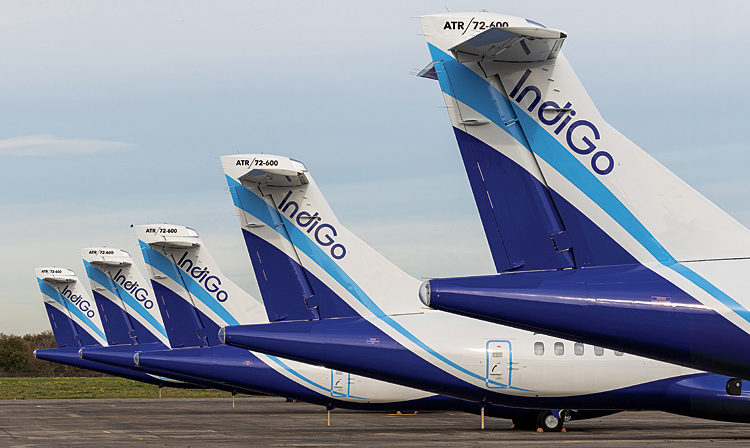
Another key advantage is accessibility. Turboprops are designed to operate from shorter, narrower or more challenging runways, which allows airlines to serve airports and communities that are not accessible to jets. This capability plays a critical role in developing regional connectivity, particularly in underserved or remote areas.
This is particularly relevant in markets such as India, where travel patterns strongly align with turboprop capabilities. According to ATR’s MobilityMonitor, more than 90 per cent of inter-city journeys in India are within 740 km, precisely the range where turboprops deliver optimal efficiency. Yet air transport today represents only around 3 per cent of this mobility market, indicating significant untapped potential. As regional connectivity expands, turboprops are naturally positioned to support this growth by enabling economically viable services on short sectors and connecting cities that are not currently linked by direct flights.
Baranwal: What all are the key advantages for the Operators and for the passengers?
Vidal: From an airline perspective, this translates into lower operating costs and the ability to run profitable services on routes with lower passenger demand. It also enables airlines to expand their networks more flexibly, opening new routes or increasing frequencies without requiring high load factors.
For passengers, the benefits are equally tangible. Turboprops make it possible to offer more direct point-to-point connections, reducing travel times overall by avoiding lengthy layovers. At the same time, modern aircraft such as the ATR -600 series offer a level of comfort that is comparable to single-aisle jets, with improved cabin design, reduced noise levels and onboard features that meet today’s expectations.
“ATR aircraft are specifically designed and structurally sized to operate safely and comfortably in the atmospheric conditions encountered at their typical cruise altitudes”
In India, this flexibility is particularly important. Despite rapid infrastructure development, ATR’s MobilityMonitor shows that only around 30 per cent of the population currently lives within 90 minutes of an airport, which is a key threshold for regular air travel usage. This means a significant share of mobility demand still relies on rail or road transport. By enabling operations from smaller airports and shorter runways, turboprops can help bridge this accessibility gap, bringing air travel within reach of hundreds of millions of additional travellers and supporting the objectives of regional connectivity initiatives such as UDAN.
The opportunity for network expansion is particularly visible in India’s secondary markets. Analysis from ATR’s MobilityMonitor identifies more than 900 potential new domestic routes, the majority involving Tier 2 and Tier 3 cities. If realised, these could generate an additional 90 million passengers annually. This highlights how turboprops can enable airlines to profitably develop thinner routes, while giving passengers access to more direct connections between cities that are currently underserved or not connected at all.
Baranwal: Do you agree that your aircraft flies within weather (under or below clouds at times – usually a jet engined aircraft flies above the weather or above clouds) and hence causes little discomfort to the passengers (as a result passengers do face turbulence at times while a jet engined aircraft does not get affected because it flies above the clouds/ above the weather)?
Vidal: These operating conditions are fully taken into account at the aircraft design stage. ATR aircraft are specifically designed and structurally sized to operate safely and comfortably in the atmospheric conditions encountered at their typical cruise altitudes. This has no impact whatsoever on safety.
Additionally, the aerodynamic loads experienced by an aircraft depend not only on turbulence intensity, but also on airspeed. While jets generally encounter fewer gusts, they fly at higher speeds. As a result, the structural loads are not necessarily higher on a turboprop than on a jet.
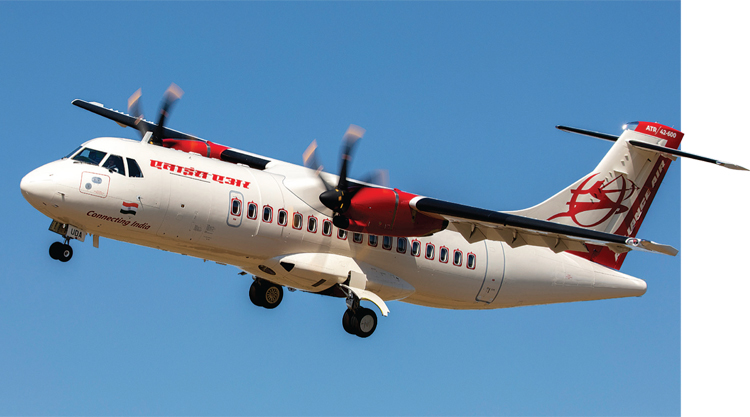
In short, occasional turbulence is a normal aspect of flight for all aircraft types. ATR aircraft are designed, certified and operated to the same rigorous safety standards as jet aircraft, and there is no difference in safety levels.
Baranwal: It is believed that technology is really evolving very fast. Can you give us some sense of the technological differences between your aircraft as old as about 10-12 years versus the new ones manufactured within a year or so?
Vidal: Over the past decade, ATR aircraft have evolved significantly through continuous upgrades, with clear, measurable improvements in performance, efficiency and onboard technology.
One of the most notable advancements is in engine performance. The latest-generation PW127XT engine delivers at least a 3 per cent reduction in fuel burn compared to the previous PW127M engine, alongside a 15 per cent reduction in NOx emissions and 20 per cent lower maintenance costs. It also offers a 40 per cent increase in time on wing, extending intervals between overhauls to up to 20,000 hours. These improvements translate directly into lower operating costs and improved aircraft availability for airlines.
The cockpit and onboard systems have also seen major evolution. ATR aircraft cockpits now include advanced navigation capabilities and performance-based navigation systems. More recent upgrades such as the new generation multi-functional computer enable future avionics evolution while reducing maintenance costs.
“Today’s ATR -600 series offers passenger comfort that is comparable to single-aisle jets, with improved ergonomics, reduced noise levels and modern features such as in-flight entertainment solutions and USB connectivity”
Cabin technology has also progressed considerably. Today’s ATR -600 series offers passenger comfort that is comparable to single-aisle jets, with improved ergonomics, reduced noise levels and modern features such as in-flight entertainment solutions and USB connectivity. ATR has also introduced its New Air Management System (NAMS), which enhances cabin comfort while improving overall system reliability and reducing maintenance requirements. Looking ahead, Additionally, high-speed internet solutions have now been certified on both 42-600 and 72-600, responding to growing passenger expectations for seamless connectivity in flight.
Overall, while the aircraft may appear similar externally, the cumulative impact of these improvements means that today’s ATR aircraft are not only more efficient and more reliable, but also significantly more advanced in terms of technology, operating performance and passenger experience than those produced a decade ago.
Baranwal: May we ask you what is average production rate of your aircraft a year?
Vidal: ATR delivered 32 aircraft in 2025 and is working towards increasing deliveries in the coming years, with the aim to assemble and deliver 60 aircraft a year by the end of the decade.
Baranwal: 3D printing, off-lately, has been one of the evolving processes of industrial production. Does this figure and contribute at any level of production in your aircraft/your engines?
Vidal: Today, the most significant contribution of 3D printing at ATR is in prototyping, testing and industrial support. It is widely used to accelerate development cycles, enabling engineers to rapidly produce and iterate components for cockpit ergonomics, system integration, and installation checks directly on aircraft. This brings substantial time and cost savings compared with traditional manufacturing.
In parallel, 3D printing is also used to produce tooling and temporary parts in the final assembly line, helping maintain production continuity when standard parts are not yet available.
While some 3D-printed components have been flown on test aircraft for evaluation purposes, the technology is still maturing for certified applications. ATR continues to monitor industry developments closely and is working with partners and authorities to prepare for future certified use, starting with less critical components before potentially expanding further.
Baranwal: How do you perceive AI (Artificial Intelligence)? What all benefits do you believe that AI can bring to the aviation industry?
Vidal: AI has the potential to bring significant benefits across the aviation industry, primarily by enhancing safety, efficiency and sustainability. At ATR, we have already started exploring a wide range of applications to understand where AI can create the most value, whether in engineering, customer support, access to information, data management or internal processes. Beyond the aircraft itself, AI can help us become more efficient, more responsive and ultimately better serve our customers.
Importantly, the potential of AI goes far beyond aircraft operations. We are also looking at how it can help us as a manufacturer work smarter, whether through improved access to technical information and archives, faster data analysis, or more efficient internal processes. By combining many small improvements across different functions, AI has the potential to increase productivity, speed up decision-making and help us better support our customers.
At aircraft level, it will also enable the rapid analysis of large volumes of flight and operational data, helping to detect anomalies and anticipate risks before they materialise. This supports safer operations and more informed decision-making.
In maintenance, AI will allow for predictive approaches by identifying patterns in historical and real-time data, reducing unexpected failures, lowering costs and minimising operational disruption. It could also give technicians faster access to the right technical information.
AI could further optimise air traffic management and flight operations, helping to reduce congestion, delays and fuel consumption, contributing directly to more sustainable aviation.
Across operations and supply chains, it can improve logistics, spare parts availability and inventory management, reducing aircraft-on-ground situations.
Baranwal: Please tell us something about SAF.
Vidal: ATR sees SAF as a key enabler of aviation’s decarbonisation. Today, ATR aircraft are already compatible with up to 50 per cent SAF, and the objective is to achieve full, 100 per cent SAF capability by 2030, following international fuel standard validation. This ambition is supported by a clear roadmap, which includes milestone flights such as the first successful flight of a commercial aircraft using 100 per cent SAF in both engines in 2022.
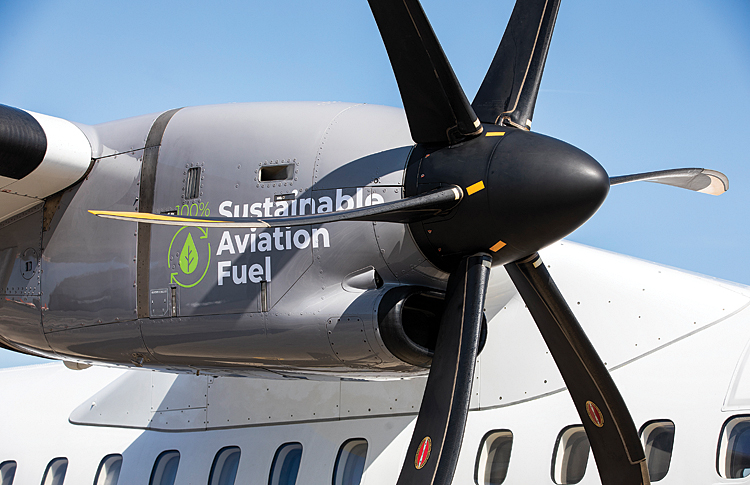
Beyond compatibility, ATR is also actively integrating SAF into its operations. Since 2023, all production test flights have been performed with a minimum of 35 per cent SAF blends, contributing to a measurable reduction in emissions and demonstrating the immediate impact this solution can deliver.
a: Will this really make difference in lowering the carbon emission?
Vidal: Yes, SAF has the potential to make a significant difference. Compared to conventional jet fuel, it can reduce lifecycle carbon emissions by up to 80 per cent, depending on the production pathway. Because it can be deployed using today’s aircraft and infrastructure, it represents one of the most effective short-term levers to cut aviation emissions while longer-term technologies continue to develop.
b. How about the cost factor of SAF versus the traditional aviation fuel?
Vidal: Today, SAF remains more expensive than conventional jet fuel, mainly due to limited production capacity and the early stage of industrial scaling. However, costs are expected to decrease as production increases and technologies mature. At the same time, regulatory frameworks and decarbonisation policies are likely to increasingly support SAF adoption. In this context, more fuel-efficient aircraft, such as turboprops, play an important role in optimising overall fuel use and helping mitigate the cost impact for operators.
Baranwal: What all environmental benefits ATR is working towards holistically?
Vidal: ATR’s environmental approach is built on combining immediate impact with long-term innovation across its aircraft, operations and future technologies.
Today, continuous improvements to its aircraft already contribute to lower emissions and fuel consumption. I mentioned earlier our latest-generation engine, the PW127XT, directly supporting airlines in reducing their environmental footprint.
Another pillar of our environmental strategy is eco-design. Environmental considerations are now integrated into the majority of engineering developments, with a full lifecycle approach used to identify and reduce impact from design through to endof-life. This ensures that sustainability is built into the product from the outset, not added afterwards.
Looking ahead, innovation is central. Through the European Union’s Clean Aviation programme, ATR is advancing hybridelectric propulsion and next-generation systems, helping to shape the future of low-emission regional flight. This work will feed into the ATR ‘EVO’ concept, which aims to deliver a new generation of aircraft with significantly improved efficiency, reduced emissions and enhanced performance. As part of this roadmap, ATR is preparing to fly a hybrid-electric regional aircraft demonstrator by the end of 2029, marking a key milestone in bringing these technologies closer to commercial reality.
All of these efforts are aligned with a clear roadmap supporting the aviation industry’s objective of reaching net-zero carbon emissions by 2050, combining concrete action today with the technologies needed for tomorrow.