




A ₹28,840-crore UDAN reboot, demand studies from every major aircraft maker, a billion-dollar turboprop order and a push to build regional aircraft at home shows where India’s regional smaller-city market is heading
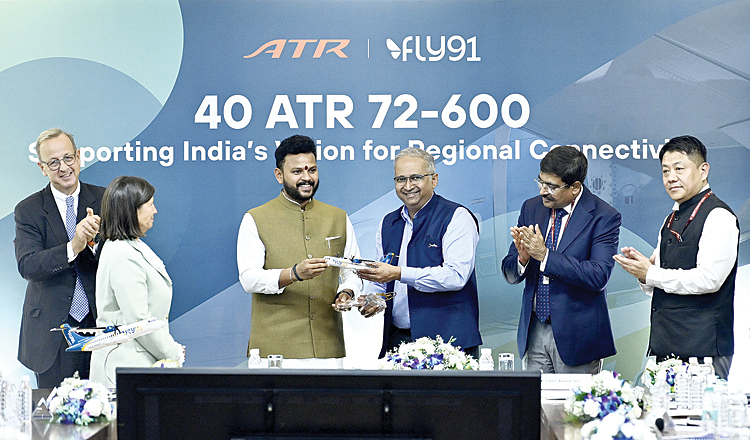
On September 3, at the Civil Aviation Ministry’s Udaan Bhawan in New Delhi, FLY91 signed a firm order for 40 ATR 72-600 turboprops worth about $1 billion. Civil Aviation Minister Rammohan Naidu and the heads of both ATR and the airline were in the room. For a carrier that began flying in March 2024, it was a statement of intent. For the industry it was a marker: India’s regional skies are now being treated as a market to be built.
Three forces sit behind that shift: a rebuilt UDAN scheme, demand studies from aircraft makers, and a drive to manufacture regional aircraft in India. Each one of them is real.
UDAN 2.0: A LONGER RUNWAY FOR REGIONAL ROUTES
The Union Cabinet approved the Modified UDAN scheme on March 25, 2026, with an outlay of ₹28,840 crore for FY2026-27 to FY2035-36. It was formally launched on July 4.
The money is spread across the system. ₹12,159 crore is earmarked over eight years to develop 100 airports from existing unserved airstrips, and ₹3,661 crore to build 200 helipads in hilly, remote and island regions. Operation and maintenance support of ₹2,577 crore is meant to help about 441 aerodromes, and airlines get ₹10,043 crore of viability gap funding over ten years. Naidu says the aim is 120 new destinations and 4 crore more passengers over the decade.
The base is already sizeable. UDAN has already operationalised 677 routes across 95 aerodromes, with more than 3.68 lakh flights carrying over 172 lakh passengers. The ministry’s latest figure is 687 routes. Operational airports have grown from 74 in 2014 to 166 by mid-July 2026. The redesigned new scheme gives airlines five years of support, tapered from the third year, though exclusivity still ends after three. The Centre has also signed 21 agreements with states and Union Territories and opened a Challenge Mode portal for aerodrome development.
Modified UDAN aims at 4 crore additional passengers over ten years, about 40 lakh a year on average. This would more than double annual regional traffic.
India’s domestic market is large, but its regional layer is small. DGCA data show domestic airlines carried 1,105.30 lakh passengers in January-August 2026, essentially flat on a year earlier. IndiGo and the Air India Group together hold about 91 per cent of the market, the government told Parliament. The dedicated regional carriers share slivers of the rest: as of January 2026, Star Air held 0.6 per cent, Alliance Air 0.4 per cent, FLY91 0.2 per cent and IndiaOne Air 0.01 per cent. Load factors show where demand holds. In August 2026, DGCA data put FLY91 at 75 per cent and Star Air at 73.6 per cent, close to IndiGo’s 79.2 per cent. Alliance Air was at 58.8 per cent and IndiaOne Air at 47.5 per cent. Demand is real where aircraft, schedule and route match. Modified UDAN aims at 4 crore additional passengers over ten years, about 40 lakh a year on average. Set against the roughly 17 lakh a year UDAN has carried so far, that would more than double annual regional traffic.
ATR MAPPING THE OPPORTUNITY
The most detailed demand model comes from ATR. Its January 2026 white paper, ‘Exploring India’s Connectivity Landscape’, uses the manufacturer’s MobilityMonitor platform, built on anonymised journeys by 20 million travellers across rail, road and air. ATR works with Georgia Tech on a “backcasting” approach. It starts from today’s travel patterns and adjusts air’s share as new airports and routes open.
The starting picture: India makes about 4.6 billion inter-city journeys a year, and air carries about 3 per cent of them, against roughly 10 per cent in China and the United States. Distance to an airport explains much of the gap. People within 90 minutes of an airport are up to three times more likely to fly, yet only about 425 million Indians, around 30 per cent of the population, live that close to one of the 120-plus mainland airports with scheduled service.
ATR then models a 200-airport scenario in line with the government’s target. It adds about 85 airports: 39 under construction or finished but limited to unscheduled flying, at least seven with advanced plans, and 38 existing airfields that could be developed. Population within reach of air service would rise by 175 million to over 600 million, and airlines would gain access to another 1.25 billion journeys, 1.5 times the market they can serve now.
The route and passenger estimates follow. The model finds over 900 new city-pairs with potential demand of at least 9,000 passengers a year, which would take the domestic network past 1,500 routes. None would link two Tier-1 cities, and 62 per cent would involve only Tier-2 or Tier-3 cities. Domestic passengers would rise from 150 million to 240 million a year, with nearly 95 per cent of the growth touching a Tier-2 or Tier-3 city.
The regional layer is where ATR makes its case for turboprops. More than 90 per cent of Indian journeys are under 740 km (400 nautical miles), and air’s share there is also about 3 per cent. A 0.2 per cent shift to air would add 10 million passengers. Assuming turboprops fly the new routes and any service with demand below 750 passengers a week, ATR estimates 35 million of the 90 million additional passengers would travel on regional routes, on about 420 new regional routes. That would need only 0.7 per cent of ground journeys to move to air.
FLY91 AND ATR: SCALING A REGIONAL AIRLINE
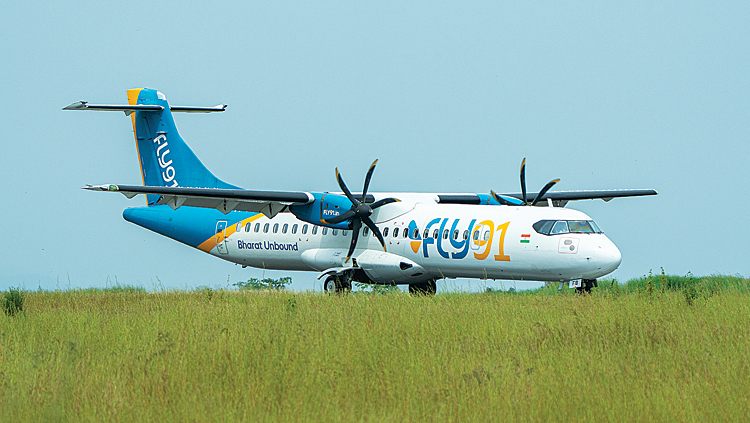
FLY91 shows what the demand case looks like in practice. The Goa-based airline started flying in March 2024 and has since operated more than 15,000 flights. It runs over 280 weekly flights to 13 destinations, among them Pune, Sindhudurg, Solapur, Jalgaon, Agatti, Hubballi, Tirupati, Vijayawada and Rajahmundry, plus Bengaluru, Goa, Kochi and Hyderabad.
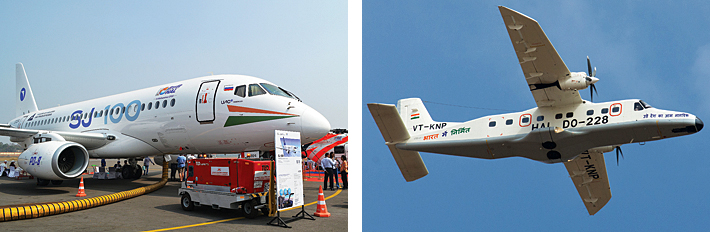
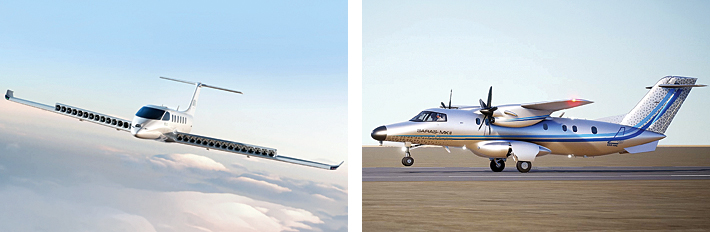
The clearest indicator of growth in India’s regional aviation sector is the increasing emphasis on indigenous manufacturing of regional aircraft
The September order takes it from six aircraft to a planned 60 within five years, according to ATR. FLY91 says it will exceed 60. Deliveries run from 2027 to 2032. ATR calls it its largest firm order in almost a decade and the largest ever from a regional airline, and it lifts ATR’s 2026 intake to 54 aircraft, already above its total net orders for 2025.
ATR’s role in the FLY91 deal goes beyond supplying aircraft. FLY91 Chief Executive Manoj Chacko says the ATR 72-600 offers the operating costs his network needs, and ATR argues that where fares are sensitive and fuel makes up a large share of costs, the turboprop is the efficient way to fly short routes. ATR’s own MobilityMonitor data also frame the order, with its release citing the 4.6 billion annual journeys, the 3 per cent air share and the 35 million passengers that regional connectivity could add. On support, ATR sells a package covering maintenance and technical services, spares and a training centre for flight crew, cabin crew and maintenance staff. Finally, ATR aircraft are the common thread in Indian regional flying, from Alliance Air to IndiGo to FLY91. Chacko says closer ties with ATR will be central to the airline’s expansion. Civil Aviation Minister Naidu tied the order to policy, saying that as UDAN 2.0 rolls out, investments of this scale will bring “tier 2 and tier 3 cities into the national economic mainstream.”
THE FLEET QUESTION: TURBOPROPS, JETS AND EVERYTHING IN BETWEEN
ATR’s own forecast calls for 210 new turboprops in India by 2044. Embraer’s January 2026 release said India will need at least 500 aircraft, in the 80-146 seat segment, over 20 years or earlier. HAL estimates demand for over 200 regional jets over the next ten years. Set against today’s fleets, with Alliance Air at about 21 aircraft, IndiGo at more than 40 ATR 72s, Star Air at 11 and FLY91 at six, the forecasts imply several times the regional aircraft now flying.
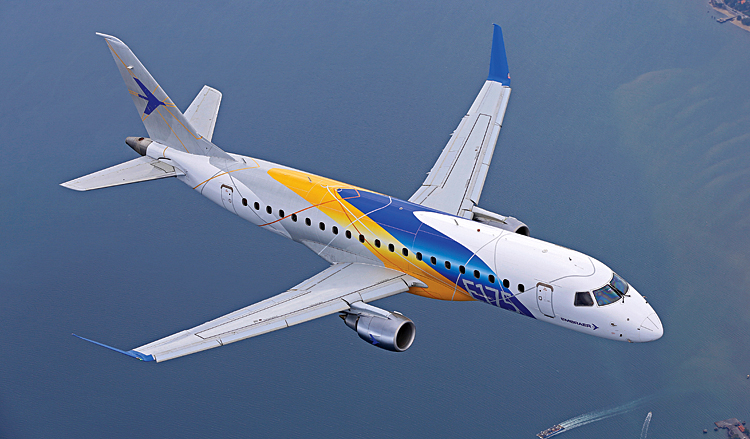
Turboprops are not the only bet. Embraer is backing regional jets heavily. Star Air, the country’s only regional airline flying Embraer aircraft, operates an all-Embraer fleet of 11 and targets 50 by 2030. There are reports of talks for up to 20 E2 jets, worth about $1 billion at list prices, though no order is confirmed. IndiGo has confirmed talks with both Embraer and ATR on aircraft that could complement or replace its turboprops.
At the small end, SpiceJet continues to fly Bombardier Q400 turboprops, and IndiaOne Air flies three single-engine Cessna 208 Caravans. It signed a letter of intent in November 2025 for up to ten De Havilland Twin Otter 300-Gs, with inductions from 2027. New entrants such as Al Hind Air, which plans ATR 72-600 flights from Kochi, and Shankh Air have received regulatory clearances.
BUILDING REGIONAL AIRCRAFT IN INDIA
The clearest indicator of growth in India’s regional aviation sector is the increasing emphasis on indigenous manufacturing of regional aircraft, with several programmes now underway to further strengthen domestic production capabilities.
THE TEST AHEAD
The pieces are in place: five-year support under UDAN 2.0, an order book led by FLY91’s 40 aircraft, jets in talks and assembly lines on paper. The future looks promising but challenges remain and are real. Can new routes survive after subsidy? Can regional load factors rise past their break-even without the subsidies? And will indigenous regional aircraft programmes reach production? India’s smaller cities have rarely had this much money, planning and industrial attention aimed at them. Whether it turns into flights will be settled over the next few years of deliveries, not in the forecasts.