




Strong export demand, expanding e-commerce, rising manufacturing activity and sustained infrastructure investments have together created a more resilient cargo ecosystem than ever before, laying the foundation for another year of sustainable expansion.
India’s air cargo industry has carried its momentum from a landmark 2025 into the first half of 2026, reinforcing its position as one of the world’s fastest-growing aviation markets. Supported by resilient exports, booming e-commerce, expanding airline networks, and sustained infrastructure investments, the sector is steadily evolving from a volumedriven business into a strategic pillar of India’s trade and logistics ecosystem. While growth has moderated from the extraordinary post-pandemic surge, the industry’s fundamentals remain stronger than ever, laying the foundation for another year of sustainable expansion.
FROM THE 2025 INFLECTION TO 2026 MOMENTUM
The first half of 2026 has reinforced a trend building over the past two years: Indian air cargo is no longer growing simply because global supply chains have recovered. Instead, its expansion is driven by deeper structural changes in the economy. Official traffic statistics from the Directorate General of Civil Aviation (DGCA) indicate that cargo volumes during January-June 2026 continued to outperform the corresponding period of 2025 across both international and domestic markets. Although passenger traffic dominates headlines, cargo has quietly emerged as one of the strongest-performing segments of India’s aviation industry, benefiting from higher export volumes, expanding airline capacity, and significant infrastructure improvements.
This growth has come against a much higher base. The sharp post-pandemic rebound has given way to a stable and predictable growth cycle, underpinned by manufacturing, exports, and logistics. Exports remain the principal driver of international cargo demand. Pharmaceuticals, electronics, engineering products, automotive components, and specialised chemicals rely heavily on air freight for speed-sensitive supply chains, while domestic cargo is increasingly powered by India’s flourishing e-commerce and express logistics sectors. The combination of stronger manufacturing, expanding airline networks, and improving airport infrastructure has transformed air cargo into an essential enabler of India’s global trade ambitions.
The rapid expansion of e-commerce has fundamentally altered air cargo movement across India
The foundations for today’s performance were laid during 2025—a year that marked a genuine turning point. Unlike the rebound years immediately after the pandemic, when demand was driven by supply chain disruptions, 2025 reflected structural growth. According to the Ministry of Civil Aviation’s Annual Report 2025, India handled 3.72 million metric tonnes (MMT) of air cargo during FY2024-25, compared with 2.53 MMT a decade earlier in FY2014-15. Cargo operations were conducted through 74 airports, highlighting the steady expansion of India’s cargo network beyond traditional metropolitan hubs. Air cargo has evolved from being a support function for passenger airlines into an essential component of India’s export competitiveness, enabling manufacturers to connect with global markets through faster and more reliable supply chains.
DUAL DRIVERS: INTERNATIONAL EXPORTS AND DOMESTIC E-COMMERCE
International cargo remained the principal engine of growth throughout 2025 and continues to underpin the market in 2026. India’s pharmaceutical industry retained its position as one of the world’s largest users of air freight, supported by exports of temperature-sensitive medicines, vaccines, and healthcare products. At the same time, electronics manufacturing emerged as an increasingly important contributor, aided by Production Linked Incentive (PLI) schemes that have accelerated investment in domestic manufacturing. Engineering goods, semiconductors, automotive components, precision machinery, textiles, and perishables also generated healthy cargo volumes, reflecting India’s growing integration into global manufacturing supply chains.
The country’s emergence as an alternative production base has further strengthened demand for reliable air freight connectivity with North America, Europe, the Middle East, and Southeast Asia. Unlike low-value bulk commodities, these high-value products require shorter transit times, predictable delivery schedules, and specialised handling—areas where air cargo enjoys a clear competitive advantage. The global environment has also remained favourable. According to the International Air Transport Association (IATA), worldwide air cargo demand reached a record level during 2025, with Asia-Pacific carriers recording the strongest regional growth, providing a supportive backdrop for Indian exporters.
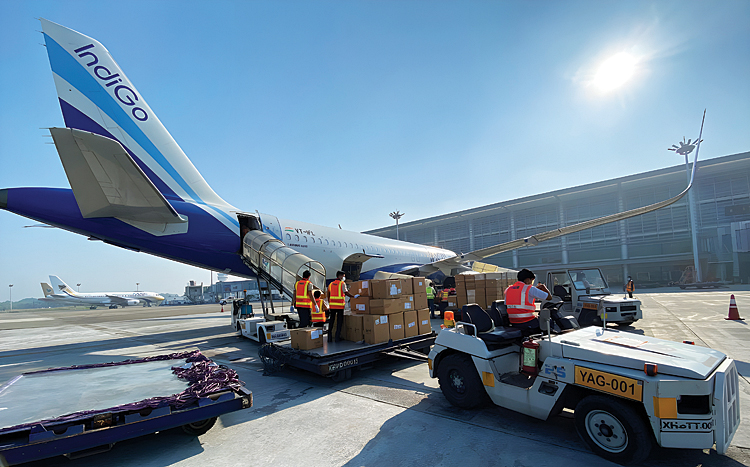
While exports have driven international volumes, the domestic market has undergone an equally significant transformation. The rapid expansion of e-commerce has fundamentally altered cargo movement across India. Same-day and next-day delivery commitments have encouraged logistics companies to rely increasingly on air transport, creating sustained demand across major metropolitan centres and Tier-II and Tier-III cities. Express logistics providers have responded by expanding networks, investing in automated sorting facilities, digital shipment tracking, and multimodal distribution systems. As a result, domestic air cargo now carries a far more diversified mix of consignments, ranging from online retail shipments and consumer electronics to healthcare products and specialised industrial components. Faster delivery expectations, growing consumer demand, and the decentralisation of manufacturing have all increased the need for efficient domestic air freight services, while stronger passenger networks have expanded belly-hold cargo capacity across the country.
EXPANDING ASSETS: INFRASTRUCTURE MODERNISATION AND FLEET CAPACITY
Perhaps the most significant difference between today’s cargo market and that of five years ago is the improvement in infrastructure. Long recognised as a major constraint, cargo handling facilities across India’s leading airports have undergone steady modernisation. Investments in larger terminals, mechanised handling systems, cold-chain infrastructure, and digital cargo processing are gradually improving operational efficiency while reducing bottlenecks. Government policy has complemented these developments by placing cargo at the centre of India’s broader logistics and manufacturing strategy. Major projects at Noida International Airport (Jewar) and Navi Mumbai International Airport are expected to create significant additional cargo capacity over the coming years, while the AAI Cargo Logistics and Allied Services Company (AAICLAS) continues to strengthen infrastructure at several regional airports.
Digitalisation is emerging as an equally important enabler. Electronic documentation, automated cargo handling, improved customs processing, and integrated logistics platforms are reducing processing times and improving shipment visibility throughout the supply chain. Collectively, these investments are creating a more efficient cargo ecosystem capable of supporting India’s rapidly expanding trade volumes.
As the industry moves through 2026, the emphasis is gradually shifting from capacity creation to operational excellence
Indian airlines also strengthened their cargo capabilities, reflecting the sector’s growing commercial importance. Fleet expansion has naturally increased belly-hold cargo capacity across domestic and international routes, while dedicated freighter operations continue to expand. IndiGo Cargo, for example, carried 4,38,147 tonnes during 2025, an increase of 11 per cent over the previous year, supported by additional freighter aircraft and higher belly-hold capacity. Meanwhile, Delhi retained its position as India’s largest cargo gateway, handling more than 1.1 million tonnes during FY2024-25 for the second consecutive year. Mumbai, Bengaluru, Hyderabad, and Chennai also continued strengthening their positions through investments in modern cargo terminals, specialised pharmaceutical facilities, and improved international connectivity. Together, these airports now form the backbone of India’s air freight ecosystem, handling the overwhelming majority of international cargo while serving as critical distribution hubs for the domestic market.
THE OPERATIONAL SHIFT: TECHNOLOGY, EFFICIENCY, AND FLEET BALANCE
As the industry moves through 2026, the emphasis is gradually shifting from capacity creation to operational excellence. The objective is no longer simply to move more freight but to build a smarter, faster, and more resilient logistics ecosystem. This transition is evident across the value chain. Airlines are focusing on yield optimisation rather than merely adding capacity, airport operators are investing in automation and digital infrastructure, while logistics providers are integrating air cargo more closely with road, rail, and warehousing networks to offer seamless end-to-end supply chain solutions. The industry’s next phase will therefore be defined less by headline cargo volumes and more by efficiency, connectivity, and reliability.
Major airports have introduced advanced cargo management systems, automated handling equipment, and expanded coldchain facilities to cater to high-value and temperature-sensitive commodities. Electronic documentation, integrated customs procedures, and digital cargo platforms are steadily reducing turnaround times while improving shipment visibility. Technology is becoming an increasingly important competitive advantage. Artificial intelligence-based warehouse management, RFIDenabled cargo tracking, and predictive analytics are enabling operators to optimise warehouse utilisation, improve handling efficiency, and reduce operational costs. These improvements are gradually bringing Indian cargo handling practices closer to international standards, strengthening the country’s attractiveness as a manufacturing and export destination.
The industry’s future success, however, will depend less on handling ever-larger volumes and more on building a worldclass cargo ecosystem
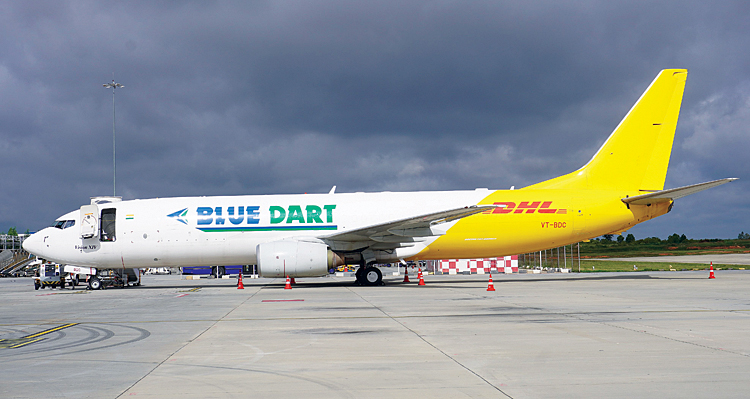
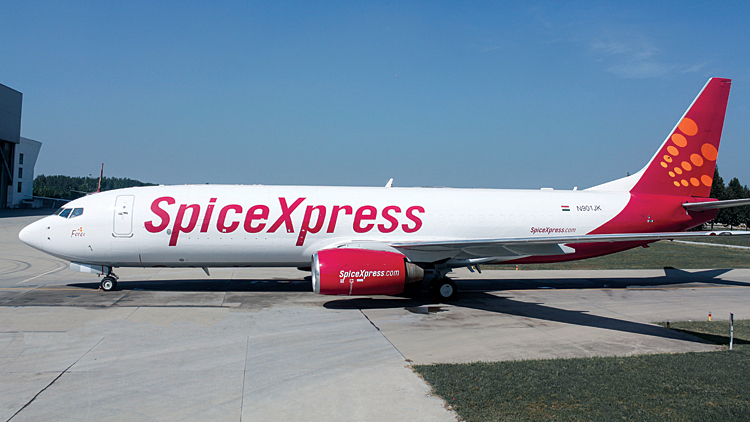
Despite rapid market growth, India’s air cargo sector continues to rely predominantly on the belly-hold capacity of passenger aircraft. This model has expanded significantly as airlines have inducted larger fleets and increased international connectivity. However, belly cargo alone cannot meet the requirements of specialised freight such as pharmaceuticals, perishables, oversized industrial equipment, and express shipments. Dedicated freighters therefore continue to play a vital complementary role. Indian carriers have responded by gradually strengthening their freighter operations, while international operators including FedEx, DHL, UPS, Emirates SkyCargo, Qatar Airways Cargo, Turkish Cargo, and Ethiopian Cargo continue to enhance connectivity between India and major global markets. Rather than replacing belly cargo, dedicated freighters are expected to complement passenger aircraft, providing the flexibility required to handle specialised cargo and respond to seasonal demand surges. Achieving the right balance between the two will remain essential as India’s export volumes continue to grow.
REGIONAL FRONTIERS AND NAVIGATING STRUCTURAL CHALLENGES
While Delhi, Mumbai, Bengaluru, Hyderabad, and Chennai dominate international cargo, the next phase of expansion is expected to come from regional India. Improved airport infrastructure, better road connectivity, and the development of multimodal logistics parks are enabling Tier-II and Tier-III cities to participate more actively in the national cargo network. This is particularly important for exporters of agricultural produce, seafood, floriculture products, and specialised manufacturing goods, who can now access air freight facilities closer to their production centres. Projects under the Regional Connectivity Scheme (UDAN), coupled with cargo infrastructure upgrades at several regional airports, are gradually broadening India’s cargo footprint beyond traditional metropolitan gateways. This decentralisation is expected to improve supply chain efficiency while reducing transportation costs for exporters located away from major cities.
Notwithstanding the sector’s impressive progress, several structural challenges continue to demand attention. Infrastructure outside major metro airports remains uneven, particularly with respect to cold-chain facilities, mechanised cargo handling, and warehousing. Dedicated freighter capacity is still relatively modest compared with the size of the market, limiting flexibility during periods of peak demand. Procedural improvements have shortened cargo processing times, but further simplification of customs and regulatory processes will be essential if India is to compete with the world’s leading logistics hubs. External factors also continue to influence market performance. Geopolitical tensions, fluctuating fuel prices, changing trade policies, and volatility in international freight rates all have the potential to affect cargo demand and airline profitability. As the market matures, maintaining healthy yields while controlling costs will become as important as increasing cargo volumes.
STRATEGIC OUTLOOK: A SUSTAINABLE PATH FOR THE DECADE
The outlook for the remainder of 2026 remains positive. India’s export-oriented sectors—including pharmaceuticals, electronics, engineering goods, and precision manufacturing— are expected to continue generating strong demand for air freight. At the same time, sustained expansion in e-commerce, express logistics, and domestic consumption should support healthy growth in the domestic market. Ongoing investments in airport infrastructure, digital cargo systems, and multimodal logistics networks are expected to improve operational efficiency further, while new cargo facilities at airports such as Jewar and Navi Mumbai will provide additional capacity for future growth.
Industry forecasts suggest that annual growth will moderate from the exceptional levels witnessed during the immediate postpandemic period. However, this moderation should be viewed as a sign of market maturity rather than slowing momentum. Growth is becoming increasingly broad-based and sustainable, supported by structural improvements in manufacturing, logistics, and global trade integration.
In conclusion, Indian air cargo has entered a defining phase in its evolution. The sector is no longer driven primarily by cyclical recovery or temporary disruptions in global supply chains. Instead, it is benefiting from enduring structural strengths: expanding manufacturing, resilient exports, rising e-commerce demand, improving airport infrastructure, and greater digital integration across the logistics ecosystem. As India strengthens its position as a global manufacturing and trading hub, air cargo will play an increasingly strategic role in connecting businesses with international markets and supporting high-value, timesensitive supply chains. The industry’s future success, however, will depend less on handling ever-larger volumes and more on building a world-class cargo ecosystem characterised by efficient infrastructure, smarter technology, streamlined regulation, and balanced capacity growth. If the momentum built over the past two years is sustained, Indian air cargo is well positioned to emerge as one of the country’s most significant aviation success stories during the remainder of this decade.