




A record number of exhibitors and national pavilions plus a first-ever finance summit underline the show’s scale, yet with a 17,000-aircraft backlog, tightening SAF mandates and eVTOLs flying for the first time, Farnborough International Airshow 2026 will test the industry’s ability to deliver.
The Farnborough International Airshow (FIA 2026) returns to UK from July 20-24 2026, marking the show’s 78th year. Organised by Farnborough International Limited (FIL), the biennial event is held at the Farnborough International Exhibition & Conference Centre, roughly 50 kilometres southwest of London.
SHOW OVERVIEW, SCALE AND GROWTH
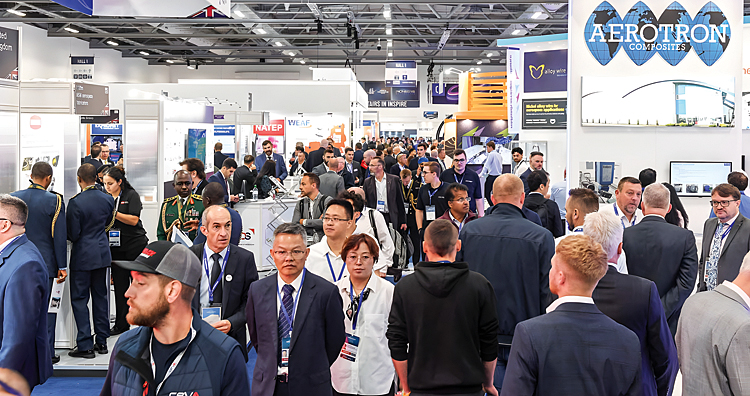
Despite global headwinds due to the ongoing crisis in the Middle East, Farnborough Airshow Chief Executive Gareth Rogers confirmed that exhibition space had sold out twice over, forcing the addition of a sixth exhibition hall with an extra 5,000 square metres of space — something not seen in recent editions of the show. Organisers expect well over 1,00,000 visitors across the week, with the first three days reserved for trade and the final two open to a wider audience, including a dedicated family and STEM-focused ‘Pioneers of Tomorrow’ day on July 24. That closing day alone is projected to draw around 45,000 visitors, up from roughly 30,000 at the equivalent day in 2024, helped by free entry for everyone under the age of 21.
By every headline measure, FIA 2026 is set to surpass its predecessors. FIA2022 drew around 1,200 exhibitors from 38 countries and roughly 76,000 visitors. FIA2024 built on that significantly, attracting 1,500 exhibitors from more than 60 countries, over 1,00,358 visitors (a 33 per cent increase on 2022), 90 aircraft on show, and more than 390 official delegations — a year that also generated $105.8 billion in commercial aircraft and engine orders, worth an estimated £13 billion to the UK economy. For 2026, organisers are projecting 1,400–1,500-plus exhibitors from 41 or more countries, 1,00,000-plus visitors, six exhibition halls (up from five), 28 confirmed country pavilions (up from around 26 in 2024), and well over 100 aircraft on the flight line, with 33 already confirmed a week before the show opened. More than 100 exhibitors rebooked their space for 2026 on the final day of the 2024 show, and a waiting list of over 50 additional organisations formed once the main halls and the new sixth hall had sold out, underlining the sustained year-on-year growth in demand for space at the event.
Internationalisation is one of the defining features of FIA 2026. Approximately 64 per cent of exhibitors are travelling from outside the UK, and the show will host 28 confirmed national pavilions, including participation from India, Japan, Australia, Mexico, Brazil and Switzerland, alongside long-standing US, European and Gulf pavilions. Canada is coordinating a dedicated national presence through its Trade Commissioner Service in partnership with the Aerospace Industries Association of Canada, targeting companies working across aerostructures, propulsion, avionics and sustainable aviation technologies. UK Government representation is also expected to exceed previous shows, with a dedicated ‘UK Government Hub’ in Hall 3 hosting departments such as the Department for Business and Trade, UK Export Finance and the Department for Transport.
COMMERCIAL AVIATION PRESENCE, MAJOR EXHIBITORS AND DISPLAYS
Farnborough has traditionally split its exhibition floor roughly 60/40 between commercial aviation and defence. For 2026, organisers and industry commentators note that balance is shifting closer to 50/50, driven by a wave of European defence and security investment. Even so, commercial aviation remains a central pillar of the show, spanning airliner manufacturers, engine makers, lessors, MRO providers, airlines, business aviation OEMs, and — increasingly — finance, digital and supply-chain specialists. The show arrives at a pivotal moment for the sector. Airbus posted its strongest first-half deliveries since 2019 (351 aircraft to June), while Boeing continued ramping up 737 MAX production. With the global order backlog reportedly exceeding 17,000 aircraft and persistent engine-supply bottlenecks, expect discussion to focus as much on manufacturers’ ability to actually deliver aircraft as on new headline order announcements. Farnborough is also, for the first time, hosting a dedicated finance and investment summit, bringing together more than 600 capital markets and investment leaders to connect funding with aerospace, defence, space and security programmes — a signal of how central financing and supply-chain resilience have become to commercial aviation conversations at the show.
For 2026, organisers are projecting 1,400–1,500-plus exhibitors from 41 or more countries, 1,00,000-plus visitors, six exhibition halls (up from five), 28 confirmed country pavilions (up from around 26 in 2024), and well over 100 aircraft on the flight line
The commercial halls will once again be anchored by the industry’s largest airframers, engine makers and system suppliers. Airbus is showcasing its A350-1000 widebody, among other commercial types, with customer deliveries and order activity a key focus, while Boeing has confirmed its attendance, with its 737, 787 and 777X programmes under close industry scrutiny amid ongoing production ramp-up. Embraer is displaying its E195-E2 regional jet and has already confirmed a firm order from US lessor Azorra for 15 E195-E2 aircraft with options for more, while Bombardier is bringing its new Global 8000 — described by the manufacturer as the fastest civil aircraft since Concorde — for its flying debut. GE Aerospace, Rolls-Royce, Pratt & Whitney and Safran (CFM) are represented across engine display, sustainable propulsion research and testbed aircraft, DHL Air UK is displaying a Boeing 777-200LR freighter conversion reflecting continued strength in air cargo, and General Atomics AeroTec Systems is showing the Do228 NXT, a multi-role aircraft aimed at surveillance, maritime patrol and regional transport. COMAC, the Chinese airframer, is again confirmed as an exhibitor, following its Middle East debut at the 2025 Dubai Airshow, though a Western static or flying debut of its aircraft remains unconfirmed. Notably, roughly 22 per cent of all exhibitors are attending Farnborough for the first time, and rather than traditional airframe or component manufacturers, many of these newcomers work in artificial intelligence, emerging technology, aviation finance and supply-chain logistics — underscoring how the show’s commercial ecosystem is broadening beyond hardware.
Farnborough is also, for the first time, hosting a dedicated finance and investment summit, bringing together more than 600 capital markets and investment leaders
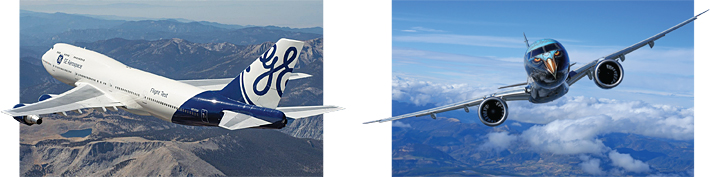
FIA2024 featured 90 aircraft in total, with 46 in the flying display and the remainder static; as of one week before FIA 2026, 33 aircraft had been confirmed, with more expected before the gates opened. On the commercial side, the flying programme is expected to include the Airbus A350-1000, Bombardier Global 8000 and Embraer C-390 Millennium, while confirmed static aircraft include the Embraer E195-E2, DHL’s 777-200LRMF, and GE Aerospace’s Boeing 747-400 flying testbed. Qatar Airways had planned to display a Boeing 777-300ER and a Gulfstream G700, though the carrier announced it was withdrawing from the show following the death of the former Qatari Emir. Vintage aircraft, including a Rolls-Royce-operated Supermarine Spitfire and a P-51D Mustang, will fly alongside the modern commercial line-up — a signature Farnborough contrast between aviation heritage and its cutting edge.
ADVANCED AIR MOBILITY AND NEW TECHNOLOGIES: EVTOLS AND AIR TAXIS
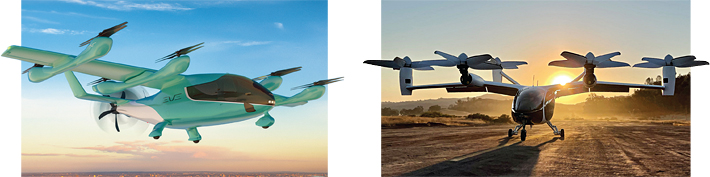
Advanced air mobility (AAM) has a genuinely elevated profile at FIA 2026, with organisers describing this year’s flying display as one of the largest and most diverse in decades. BETA Technologies is flying its all-electric CX300 conventional take-off and landing aircraft for the first time at Farnborough, with both daily flight demonstrations and static display, while its MV250 will also be on static display. Vertical Aerospace, the UK eVTOL developer, is working to clear final regulatory hurdles in time to fly its VX4/VA-1X electric air taxi, which would mark a significant milestone given the aircraft is being developed only a few hundred miles from the showground. Eve Air Mobility, the Embraer-backed air taxi developer, will showcase a full-scale eVTOL mock-up and an immersive flight simulator at a dedicated pavilion adjacent to the flight line, while GE Aerospace’s Saab 340B hybrid-electric testbed will fly daily as part of the NASA Electrified Powertrain Flight Demonstration (EPFD) programme, developed with Boeing subsidiary Aurora Flight Sciences to trial megawatt-class hybrid-electric propulsion. Other AAM and advanced-technology developers such as Joby Aviation, Lilium, Supernal and Wisk Aero are expected to use the show to provide updates on certification and commercialisation progress, even where they are not flying aircraft on-site. Collectively, this represents a marked shift from earlier Farnborough editions, when eVTOL participation was largely confined to static mock-ups; in 2026, air taxis are, for the first time, sharing runway time with mainline commercial jets.
SUSTAINABILITY AND SUSTAINABLE AVIATION FUEL (SAF)
Sustainable aviation fuel (SAF) and broader decarbonisation remain among the most closely watched themes at FIA 2026, continuing discussions from Farnborough’s own Sustainable Skies World Summit held earlier in the year. The UK’s Sustainable Aviation Fuel Mandate — which requires SAF blending to rise from 2 per cent to 10 per cent by 2030 — is a central reference point, alongside a UK Government-backed Revenue Certainty Mechanism designed to unlock private investment and a £63 million Advanced Fuels Fund intended to accelerate production. Industry body Sustainable Aviation has also introduced an Advanced Market Signal initiative aimed at scaling the greenhouse gas offset market. Expect exhibitors and conference sessions to address the practical bottlenecks in scaling SAF: feedstock availability, production capacity, cost, and the parallel development of hydrogen and hybrid-electric propulsion. Legal and industry advisers covering the show note that sustainability is increasingly shaping investment strategy and regulatory decisions across aerospace, rather than being treated as a standalone environmental initiative. Supply chain resilience is a closely linked theme, with exhibitors and delegations expected to focus on diversifying sourcing, improving transparency, and building more flexible supplier networks in response to recent geopolitical and logistical disruption.
Advanced air mobility (AAM) has a genuinely elevated profile at FIA 2026, with organisers describing this year’s flying display as one of the largest and most diverse in decades
OTHER KEY THEMES AND ATTRACTIONS
A number of other threads are expected to run through the week. With a combined order backlog above 17,000 aircraft, conversations are expected to focus heavily on whether Airbus and Boeing can convert existing orders into deliveries, given ongoing engine-supply constraints. A significant share of first-time exhibitors are technology and data companies rather than traditional aerospace manufacturers, reflecting AI’s growing role in design, MRO and airline operations, while Bombardier’s Global 8000 debut is expected to be one of the week’s biggest businessaviation talking points. The Pioneers of Tomorrow programme, careers hub and STEM activities on the final day are aimed at addressing a well-documented industry skills shortage, and the show’s first dedicated aerospace finance summit reflects how central capital access has become to scaling both traditional production and emerging technologies like SAF and AAM.
Together, these threads point to a show that remains a pivotal barometer for commercial aviation: a venue where airframers, engine makers, financiers, regulators and a new generation of electric and autonomous aircraft developers converge to set the direction for the next two years of civil aerospace.