



IndiGo CEO Pieter Elbers leaves after the December crisis. However, the leadership change amid the current geopolitical crisis will find IndiGo searching for cost, margin and revenue management
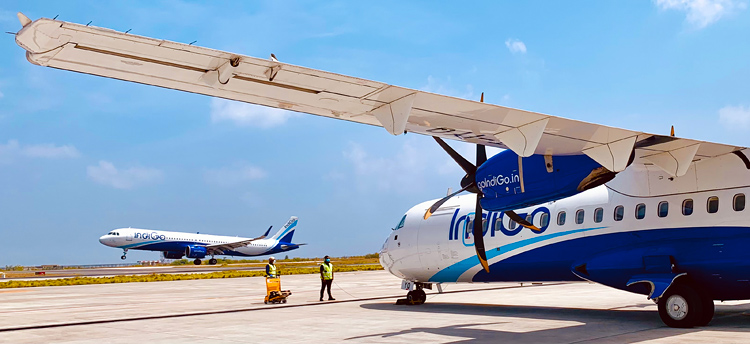
In a major leadership change at India's largest airline, Pieter Elbers has stepped down as Chief Executive Officer of IndiGo after a turbulent period marked by large-scale flight cancellations and regulatory scrutiny.
The development comes just months after the airline faced the biggest operational crisis in its 20-year history, when nearly 4,500 flights were cancelled in December 2025. The disruptions affected hundreds of thousands of passengers across the country and triggered concerns about operational stability at the carrier, which commands roughly 65 per cent of India's domestic aviation market.

Following the cancellations, India's aviation regulator, the Directorate General of Civil Aviation, imposed a fine of $2.45 million on the airline and issued reprimands to several senior executives
Following the cancellations, India's aviation regulator, the Directorate General of Civil Aviation, imposed a fine of $2.45 million on the airline and issued reprimands to several senior executives. The regulator had cited operational lapses and inadequate contingency planning that contributed to widespread passenger inconvenience.
IndiGo's parent company, InterGlobe Aviation, confirmed Elbers' resignation in a statement on Thursday. The company said the decision was taken amid ongoing efforts to stabilise operations and restore customer confidence after the disruptions.
The airline also announced that its co-founder and Managing Director, Rahul Bhatia, will assume interim charge of the company until a permanent successor is appointed. Bhatia's company, InterGlobe Enterprises, is the largest shareholder in InterGlobe Aviation, holding a 35.69 per cent stake as of December 2025.

The airline also announced that its co-founder and Managing Director, Rahul Bhatia, will assume interim charge of the company until a permanent successor is appointed
Industry analysts say the leadership transition comes at a critical time for IndiGo as India's aviation sector continues to expand rapidly. The country is widely regarded as the world's fastest-growing aviation market, with rising passenger demand and increasing competition among carriers.
However, his resignation comes on the heels of a bigger crisis beyond the domestic challenges–the Israel-Iran war. Obviously, it means fuel disruption. The Iran-Israel conflict is having significant effects on the Indian aviation market because West Asia is a key air corridor for flights between India, Europe, North America, and Africa.
The Middle East is one of the busiest aviation corridors in the world. Due to the conflict, several countries have restricted or closed their airspace.
The impact on the aviation sector is already visible, as Airlines must reroute flights to avoid Iranian and nearby airspace. For example, flights between India and Europe and the US have become longer, leading to increased fuel consumption and scheduling disruptions.
The leadership transition comes at a critical time for IndiGo as India's aviation sector continues to expand rapidly
Indian airlines are particularly affected because they already cannot use Pakistan's airspace, leaving very limited alternate routes. Airlines such as Air India have already increased fuel surcharges on tickets due to rising fuel costs. For airlines, Aviation Turbine Fuel (ATF) forms about 40 per cent of operating costs.
Also, the Middle East produces a large share of global oil, and war risk raises crude prices and further disrupts supply chains.
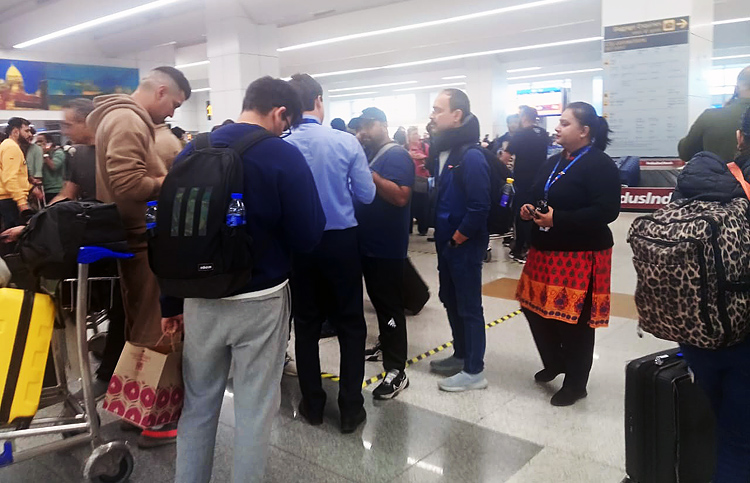
The war adds to existing problems in India's aviation sector. Industry estimates suggest the aviation sector could face losses of around ₹18,000 crore if disruptions continue.
Additionally, rising fuel prices, rerouting costs, and a weaker rupee are squeezing airline margins. If the conflict escalates, the passenger demand may decline due to uncertainty. Tourism and international travel may slow. Travel insurance costs may rise. Air travel disruptions are already affecting routes to major Middle East hubs like Dubai, Doha, and Abu Dhabi.
Since India is the third-largest and fastest-growing aviation market, prolonged geopolitical instability in West Asia could significantly slow industry growth and hit the top line and bottom line of IndiGo as well
Since India is the third-largest and fastest-growing aviation market, prolonged geopolitical instability in West Asia could significantly slow industry growth and hit the top line and bottom line of IndiGo as well.
IndiGo's stock has often been sensitive to negative news developments, such as the recent domestic crises, rising crude oil prices, and geopolitical tensions in the Gulf region, so the stock has struggled to deliver strong performance in recent times.
However, despite the recent crisis, IndiGo remains the dominant player in India's domestic aviation landscape. The airline is expected to focus on strengthening operational reliability, improving passenger services, and rebuilding public trust in the coming months.