




China tests Hydrogen-Powered Cargo Aircraft, signalling shift from Concept to Application
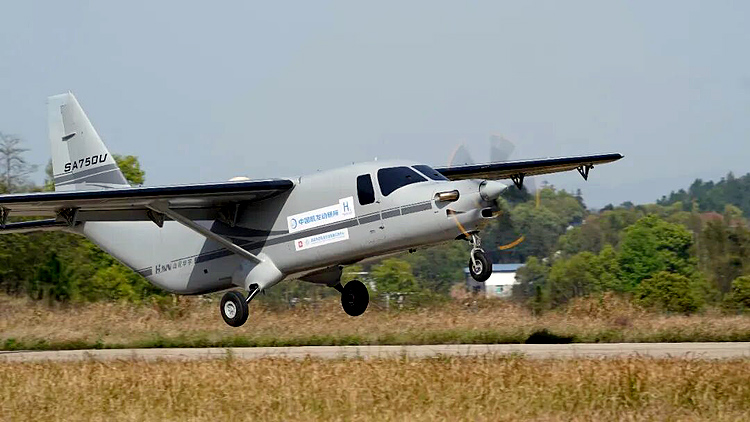
China has taken a notable step forward in next-generation aviation with the successful test flight of a hydrogen-powered cargo aircraft–marking a transition from experimental research to early-stage operational validation.
The flight, conducted in Zhuzhou in early April 2026, involved a 7.5-tonne unmanned cargo aircraft powered by a hydrogen-fuelled turboprop engine. While the sortie lasted just over a quarter of an hour, its significance lies less in duration and more in what it represents: the first real-world demonstration of a megawatt-class hydrogen propulsion system integrated into an aircraft platform.
China's hydrogen-powered cargo aircraft test marks a shift from experimental research to early-stage operational validation in aviation
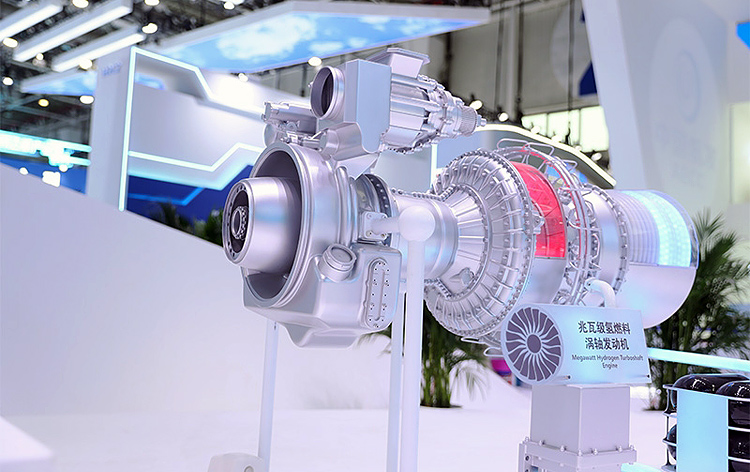
Unlike earlier hydrogen aviation efforts globally–many of which remain confined to ground testing or small-scale demonstrators–this programme reflects a more integrated approach. The aircraft is powered by a domestically developed engine in the megawatt class, indicating that China is not only advancing propulsion technology but also aligning it with practical airframe applications.
Equally important is the ecosystem underpinning the test. Chinese developers have emphasised the creation of a full technological chain, covering engine design, fuel systems, and aircraft integration. This level of vertical integration reduces reliance on external suppliers and positions the programme for more rapid iteration and scaling.
The use of an unmanned cargo platform reflects a pragmatic approach, positioning freight operations as the first viable entry point for hydrogen propulsion
The choice of an unmanned cargo platform is strategic. Hydrogen propulsion, while promising, still faces substantial technical and operational constraints–particularly around storage, infrastructure, and certification. Cargo operations offer a more flexible entry point, with fewer regulatory hurdles and greater tolerance for design trade-offs.
In this context, low-altitude logistics, regional freight, and specialised operations such as emergency supply delivery are likely to serve as initial deployment segments. The model mirrors broader global thinking, where cargo and regional aviation are expected to act as proving grounds for alternative propulsion technologies before any transition to passenger transport.
Beyond the technical milestone, the development carries wider industrial and strategic implications. China's push into hydrogen aviation aligns with its broader ambitions in clean energy and advanced manufacturing. By moving early in hydrogen-powered flight, the country is positioning itself in a domain where global standards and supply chains are still taking shape.
There is also a clear linkage to the hydrogen economy more broadly. Aviation applications could act as a catalyst for investments in hydrogen production, storage, and distribution–particularly as governments and industries seek scalable use cases for green hydrogen.
Despite technical progress, key challenges remain around hydrogen storage, infrastructure, certification, and overall economic viability
At the same time, the unmanned nature of the platform leaves open potential dual-use applications, ranging from remote logistics to disaster response and potentially strategic operations.
Despite the progress, the gap between demonstration and deployment remains significant. Hydrogen's low volumetric energy density continues to pose design challenges, requiring larger storage systems that impact payload and range. Infrastructure is another critical constraint; dedicated refuelling networks are still largely absent, even in advanced markets.
The development signals China's intent to take a leading role in next-generation, low-carbon aviation technologies while shaping future industry standards
Economic viability is equally uncertain. The cost of producing and distributing green hydrogen remains high, and without substantial reductions, widespread adoption in aviation will be difficult to justify commercially.
Certification pathways, particularly for crewed aircraft, will add another layer of complexity, potentially extending timelines well into the next decade.
The significance of China's hydrogen cargo aircraft test lies not in the headline metrics, but in the direction of travel. By focusing on cargo and unmanned operations, the programme reflects a pragmatic approach–prioritising achievable use cases while continuing to refine underlying technologies.
For the global aviation industry, the message is clear: hydrogen propulsion is beginning to move out of theory and into application. The pace of that transition–and whether it can scale economically–will determine how central it becomes to aviation's long-term decarbonisation strategy.
For now, China's test serves as an early indicator that the race is no longer just about feasibility. It is increasingly about execution.
| Type: | Unmanned cargo aircraft |
| Maximum Takeoff Weight: | ~7.5 tonnes |
| Propulsion: | Hydrogen-fuelled turboprop (megawatt-class) |
| Power Output: | >1 MW |
| Test Flight Duration: | ~16 minutes |
| Estimated Range (test profile): | ~36 km |
| Cruise Speed: | ~220 km/h |
| Operating Altitude: | ~300 m |
| Payload: | Not disclosed (cargo UAV class) |